Roundhay Garden Scene 1888 , the 1st film created.
Arrival Of Sound
As anticipated, the arrival of sound created great upheaval in the history of the motion picture industry, (as exemplified in the film Singin' in the Rain (1954). Film studios were confronted with many problems related to the coming of sound, including restricted markets for English-language talkies.Artistically, acting suffered as studios attempted to record live dialogue, because stationary or hidden microphones (in either their costumes or other stage props) impeded the movement of actors. Some of the earliest talkies were primitive, self-conscious, crudely-made productions with an immobile microphone - designed to capitalize on the novelty of sound.
 Silent film studios became obsolescent, and new investments had to be made for expensive new equipment, technological innovations, and sound-proofed stages. Cameras were mounted on moveable, squeak-proofed dollies, and microphones were hung from booms that could be held above the action (outside of the camera's view). Lubitsch's first sound film The Love Parade (1929) (with Jeanette MacDonald's debut appearance), exhibited the director's creative adaptation to the requirements of sound film, and was one of the first backstage musicals with musical numbers that were integral to the plot. Smoothly directed, Lubitsch avoided making it stage-bound and over-acted like many of the early talkies. And Rouben Mamoulian's first film Applause (1929) did creative and revolutionary things with recorded sound, such as overlapping soundtracks, and using sounds as cues or signals.
Arrival Of Colour
The Use of Color:
Another technological advance, in addition to sound, was the use of color. In the earliest years of the industry, hand-tinting/painting had been tried, but it was largely impractical, laborious, and unrealistic looking. Another process called Kinemacolor used a movie camera and projector that both exposed and projected black and white film through alternating red and green filters. In 1915, the Technicolor Motion Picture Corporation was founded by Herbert Kalmus, Daniel Comstock, and Burton Westcott to develop a more advanced system to colorize motion pictures. The company's first color process was a two color (red and green) additive system that used two color negatives pasted or printed together. The first two-color Technicolor production was The Gulf Between (1917), and the first commercial, two-color Technicolor feature film made was the six-reel The Toll of the Sea (1922), also noted as the first to use a subtractive two-color process. The first feature-length blockbuster color picture using this same innovative process was The Black Pirate (1926) with Douglas Fairbanks, Sr.
 By 1932, what began as a two-color system in the mid- and late 1910s and 1920s evolved into a much richer and vibrant three-color process by Technicolor. Disney's first Technicolor cartoon, Flowers and Trees, won Disney his first Oscar for Best Short Film-Cartoon of 1931-32. The first three-strip, regular exposure Technicolor film was RKO's and Rouben Mamoulian's Becky Sharp (1935) - the first feature-length, three-strip Technicolor production.
Arrival Of TV
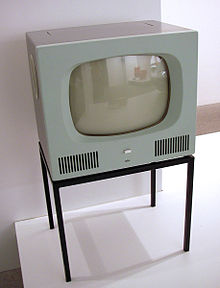
In 1927, Philo Farnsworth made the world's first working television system with electronic scanning of both the pickup and display devices, which he first demonstrated to the press on 1 September 1928.
The first practical use of television was in Germany. Regular television broadcasts began in Germany in 1929 and in 1936 the Olympic Games in Berlin were broadcast to television stations in Berlin and Leipzig where the public could view the games live.
Wide Screen Panorama
|


No comments:
Post a Comment